
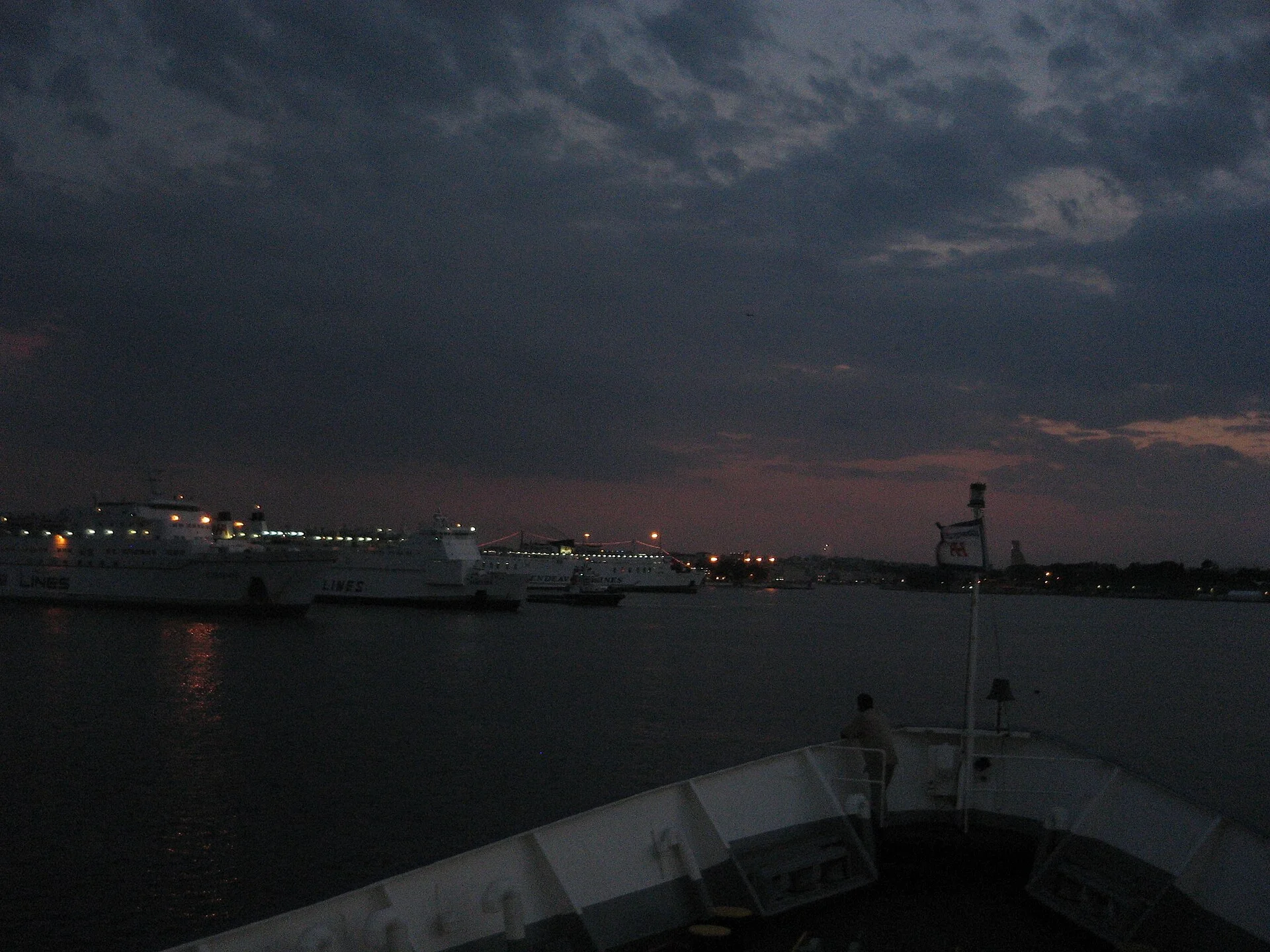
Conference Venue
Brindisi
Gateway to the Adriatic
An ancient port city in Puglia, southern Italy — where Roman history meets the crystal-clear waters of the Mediterranean.
Orientation
The Conference Map
Conference venues, travel hubs, recommended hotels & B&Bs, and the landmarks of Brindisi's historic centre — tap any point for details and directions.
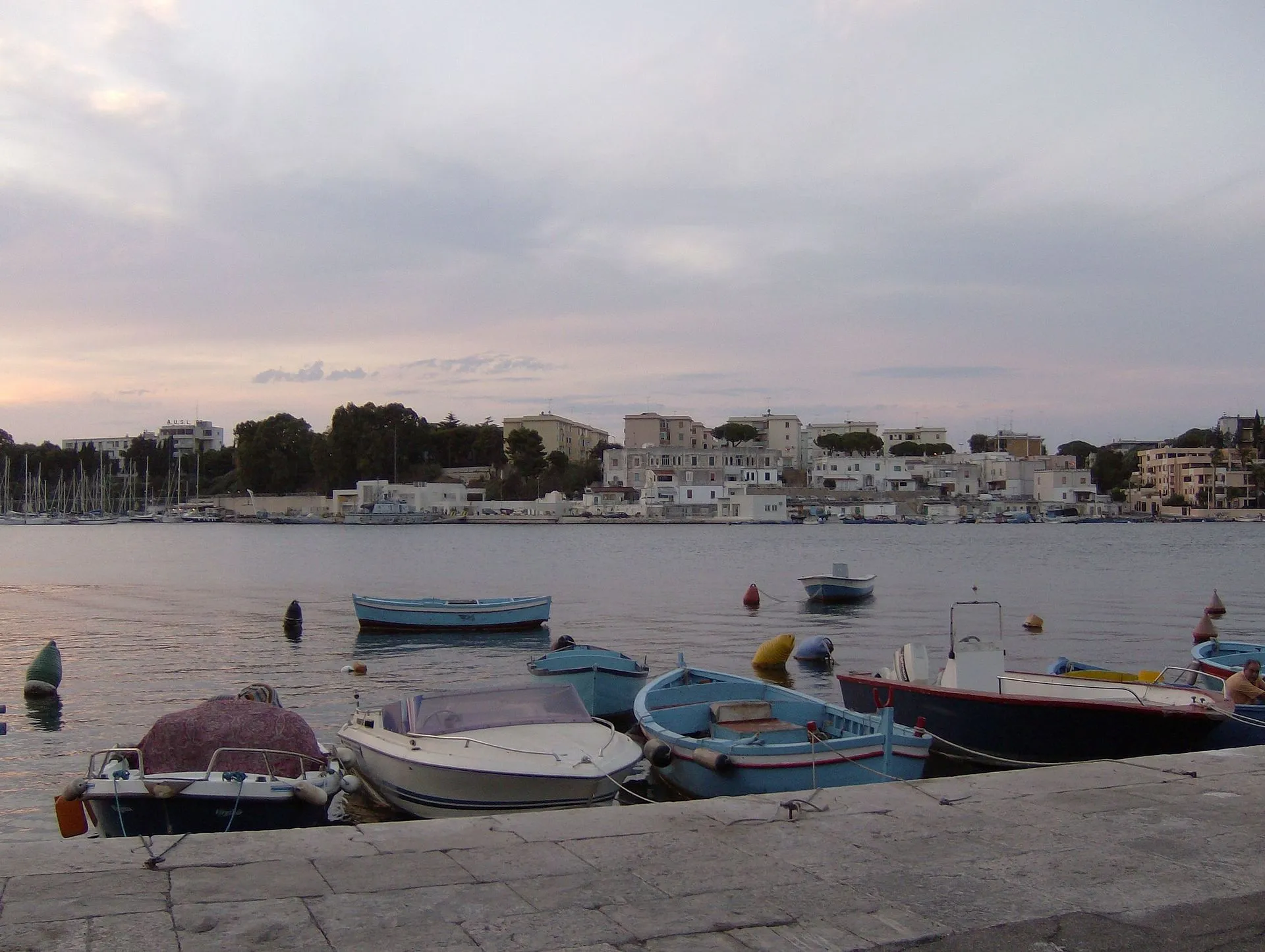
The inner harbor of Brindisi — a natural port since antiquity
The City
A Natural Harbor
Since Antiquity
The Channeling 2026 conference will be held in Brindisi, a historic port city on the Adriatic coast of Puglia in southern Italy. Known since antiquity as the gateway to the East, Brindisi combines rich cultural heritage with modern conference facilities.
The city's natural harbor — one of the finest on the Adriatic — has made it a crucial maritime hub for over three millennia. From Messapian settlements to Roman conquest, from Crusader embarkation point to modern-day ferry terminal, Brindisi's story is written in the waves.
3000+
Years of History
25°C
Avg. September
15 min
Airport to City
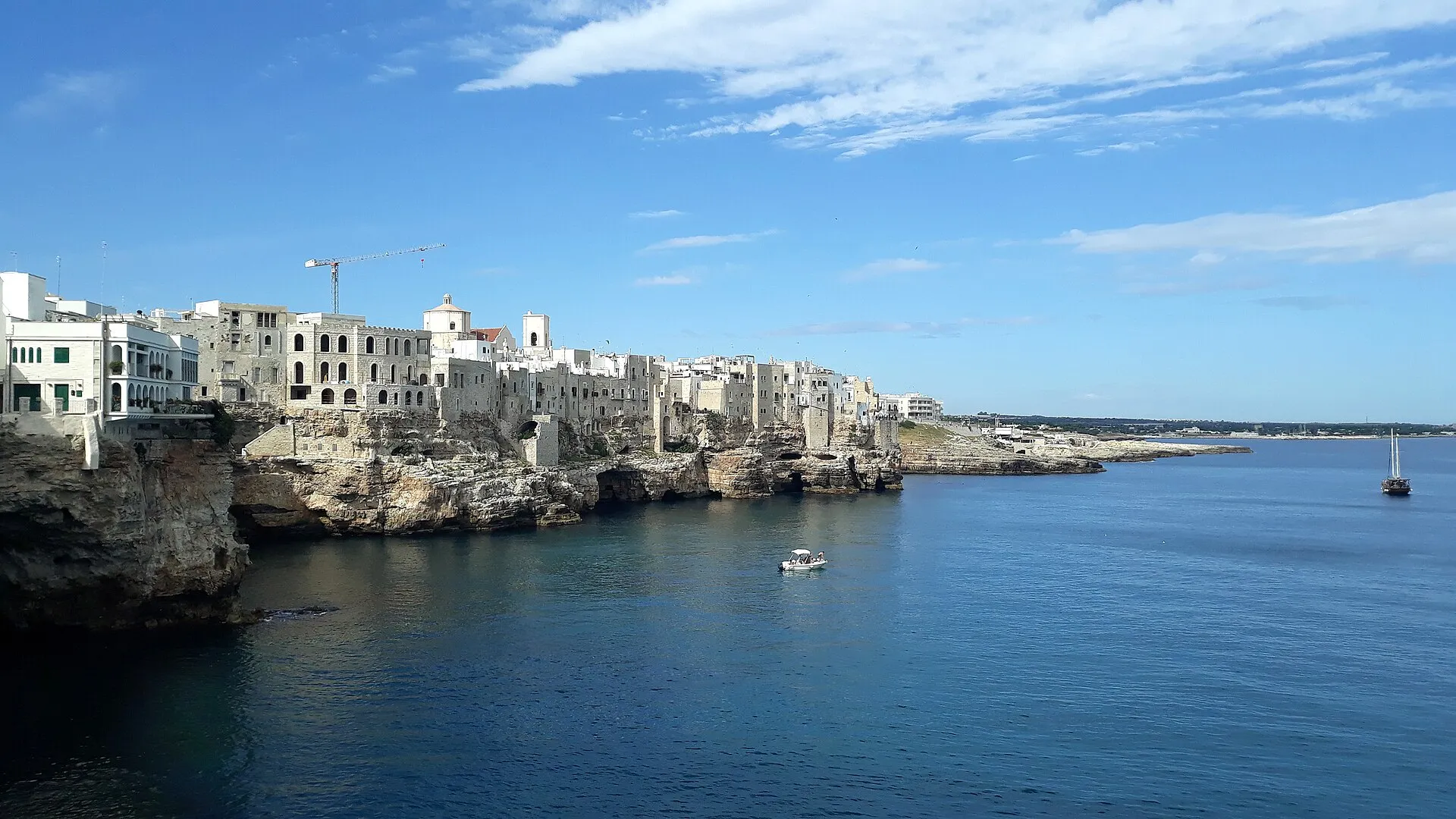
Puglia Region
The Adriatic Coast
From the white cliffs of Polignano a Mare to the baroque splendor of Lecce, Puglia's coastline stretches over 800 km of pristine Mediterranean beauty. Crystal-clear waters, hidden coves, and ancient fishing villages await between conference sessions.
Discover
About Brindisi
A city of history, sea, and science — the perfect setting for Channeling 2026
From the Organizers
"From our very first visit we immediately discovered a city of extraordinary richness. Brindisi revealed itself to be deeply rooted in history, yet at the same time welcoming, vibrant, and surprisingly modern — with beautifully renovated spaces and an atmosphere that feels both authentic and contemporary. What truly made the difference, however, were the people: kind, open, and genuinely welcoming, full of enthusiasm and a sincere willingness to collaborate."
— Channeling 2026 Organizing Committee
Historic Heritage
Founded in the 8th century BC as a Messapian settlement, Brindisi flourished under Roman rule as the eastern terminus of the Via Appia and Via Traiana — the main naval base for routes to the East. The city preserves remarkable monuments spanning three millennia: Roman columns, a Knights Templar circular church, two medieval castles, and the mosaic-floored Palazzo Granafei-Nervegna — the conference venue itself.
Puglia & Salento
Puglia offers stunning Mediterranean coastlines, ancient olive groves, unique architecture (trulli houses), and world-renowned cuisine. The Salento region to the south is famous for its crystal-clear waters and baroque cities.
September Climate
September and October are particularly wonderful in southern Italy: pleasant temperatures (22–26°C), sunny days, and a warm sea ideal for swimming. A light windbreaker or jacket is advisable for occasional cooler evenings or unexpected weather.
Local Cuisine
Brindisi's cuisine balances land and sea. Savour handmade orecchiette and cavatelli pasta, polpo pignata (octopus slow-cooked in a clay pot), fresh mussels, and DOP extra-virgin olive oil from the hills of Brindisi. Wines include Primitivo di Manduria Dolce Naturale DOCG and Negroamaro Terra d'Otranto DOC. End with cartellate — fried dough with honey or wine must.
Landmarks
Brindisi Heritage
Millennia of history written in stone — from Roman columns to Knights Templar churches and medieval castles
Palazzo Granafei-Nervegna
Built in the second half of the 16th century by the Granafei family, originally from Constantinople. Sold to the Nervegna brothers in 1862 and acquired by the Municipality in 1930. Houses splendid Roman-era mosaic floors, the original capital of the Roman column, and the evocative Hall of the Column.
Roman Columns
The iconic columns at the harbour marked the eastern terminus of the Via Appia. One still stands; the other, after collapsing, was donated to the city of Lecce to support the statue of Saint Oronzo. Their original capitals are preserved in the Palazzo Granafei-Nervegna.
Tempietto di San Giovanni al Sepolcro
A distinctive circular church built by the Knights Templar in the 11th century, modelled on the Church of the Holy Sepulchre in Jerusalem. One of the finest examples of Templar architecture in southern Italy, preserved in the heart of the historic centre.
Castello Svevo (Swabian Castle)
Commissioned by Holy Roman Emperor Frederick II on the western side of the harbour. A fine example of Swabian military architecture in southern Italy, this imposing fortress controlled the inner harbour and the city's maritime access for centuries.
Castello Alfonsino (Aragonese Castle)
Located on the island of Sant'Andrea in the outer harbour, this Aragonese-era fortress commands striking views over the sea. Built to reinforce coastal defences, it remains one of Brindisi's most distinctive landmarks, visible from the city waterfront.
Scalinata di Virgilio (Virgil's Staircase)
The monumental staircase leading up to the Roman Columns, named after the poet Virgil who is said to have died in Brindisi. Up to 900 people gather here during events and celebrations. Count the steps as you climb — there's no rush.
Gallery
Brindisi Landmarks
Ancient heritage, Mediterranean charm, and golden sunsets on the Adriatic
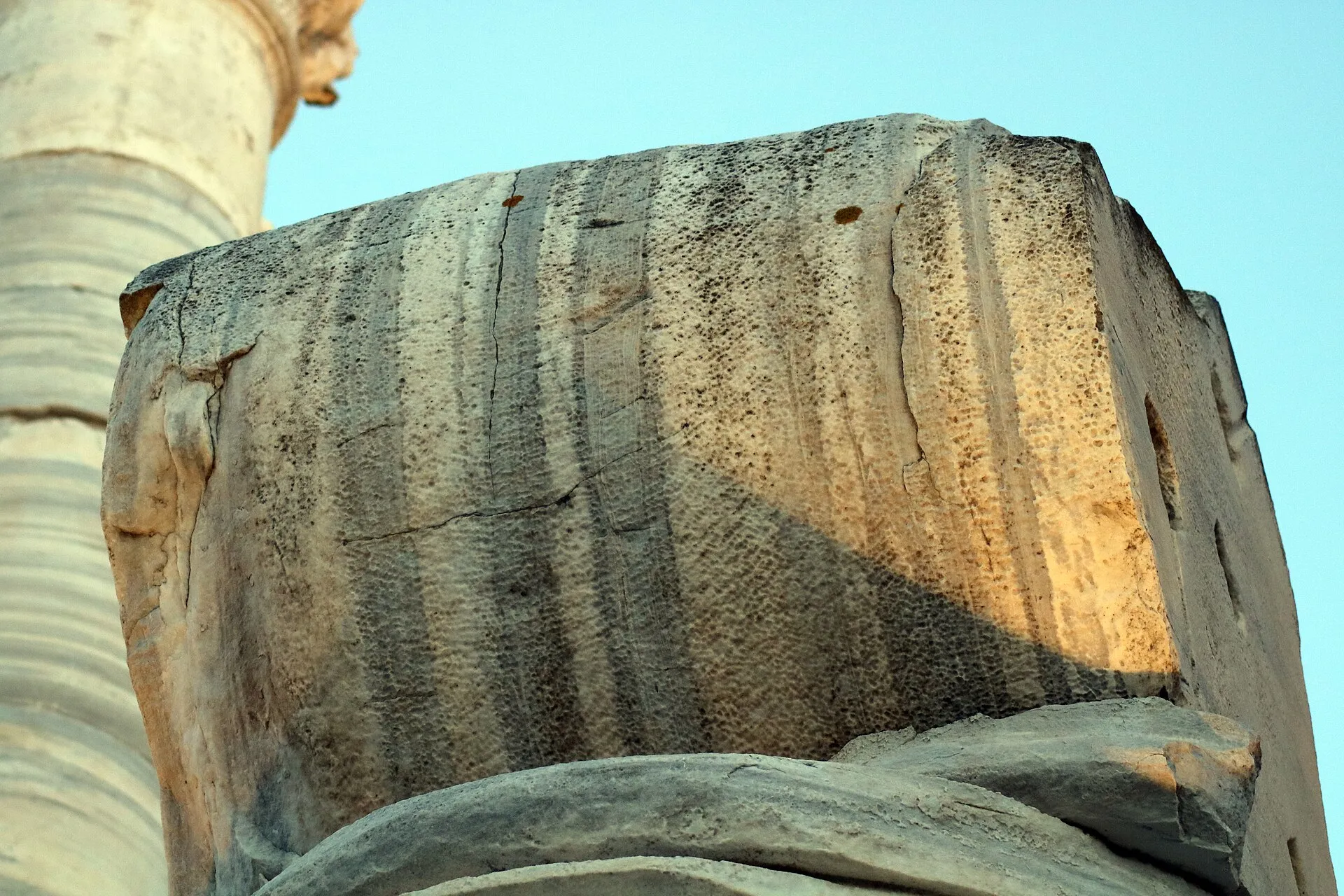
Roman Columns
The ancient Roman columns at the port of Brindisi, marking the end of the Via Appia
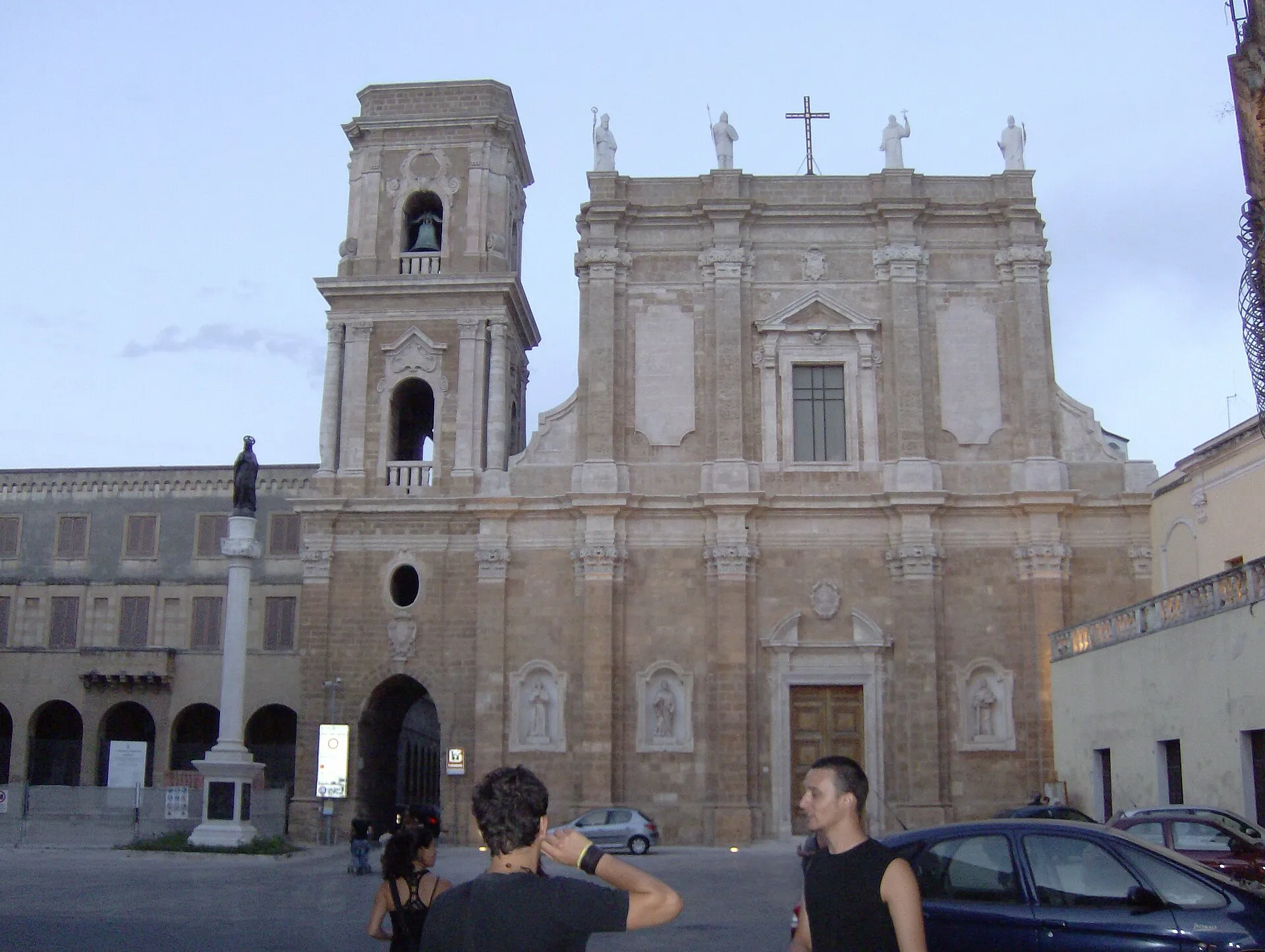
Cathedral
Brindisi Cathedral, an 11th-century Romanesque cathedral in the historic center
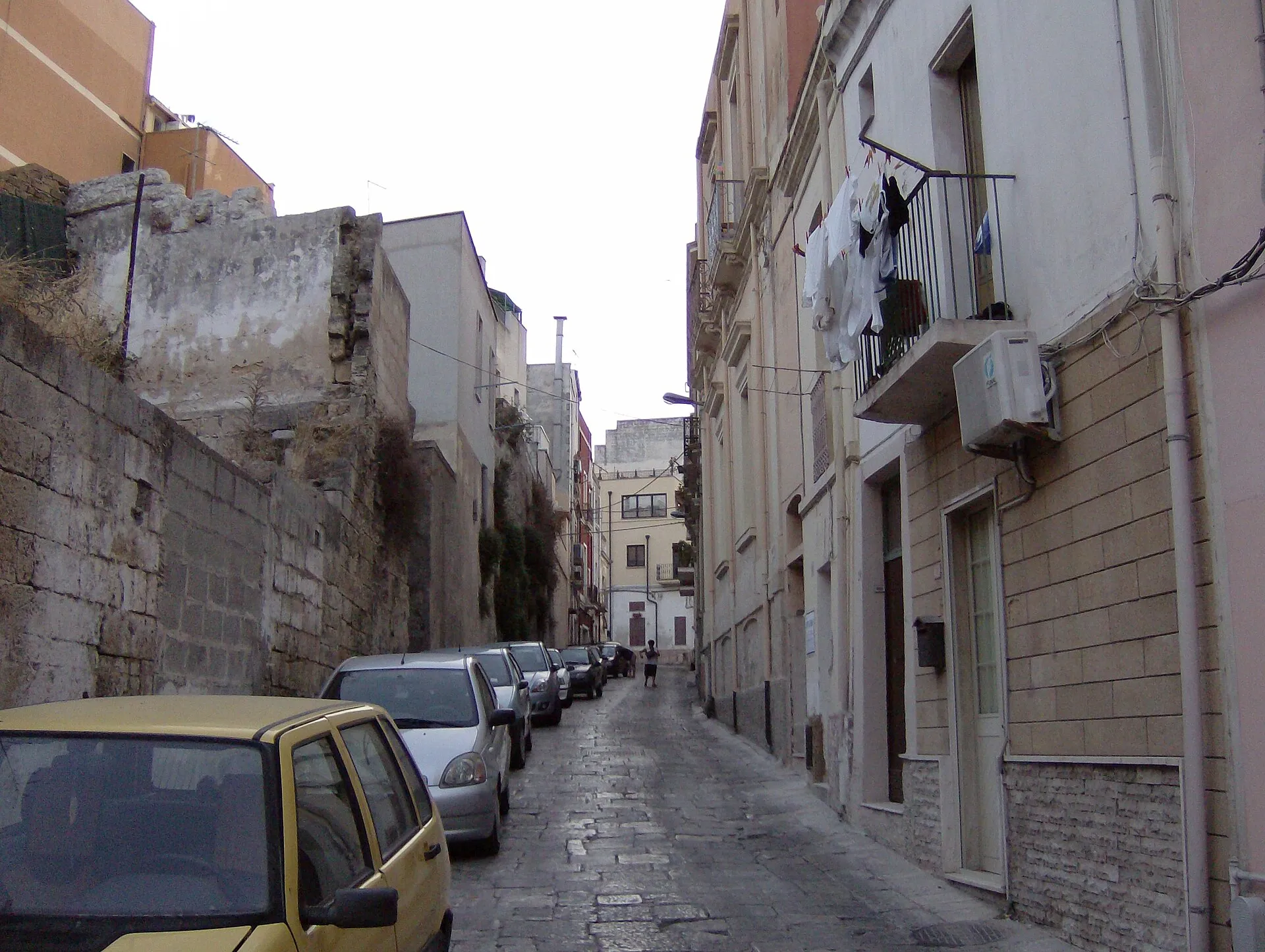
Old Town
Narrow streets and traditional architecture in the historic center of Brindisi
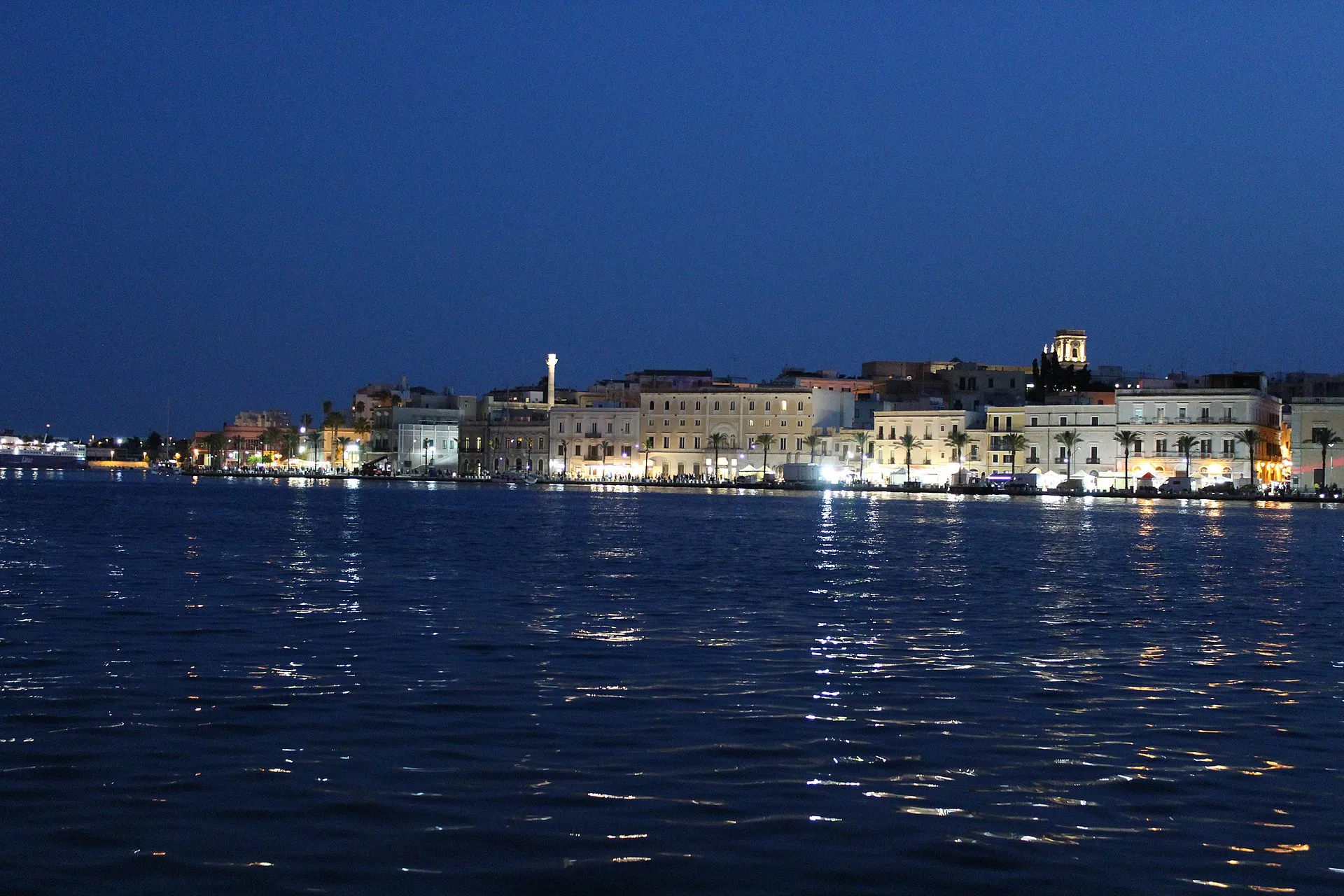
Lungomare
The Lungomare waterfront promenade along the Brindisi harbor
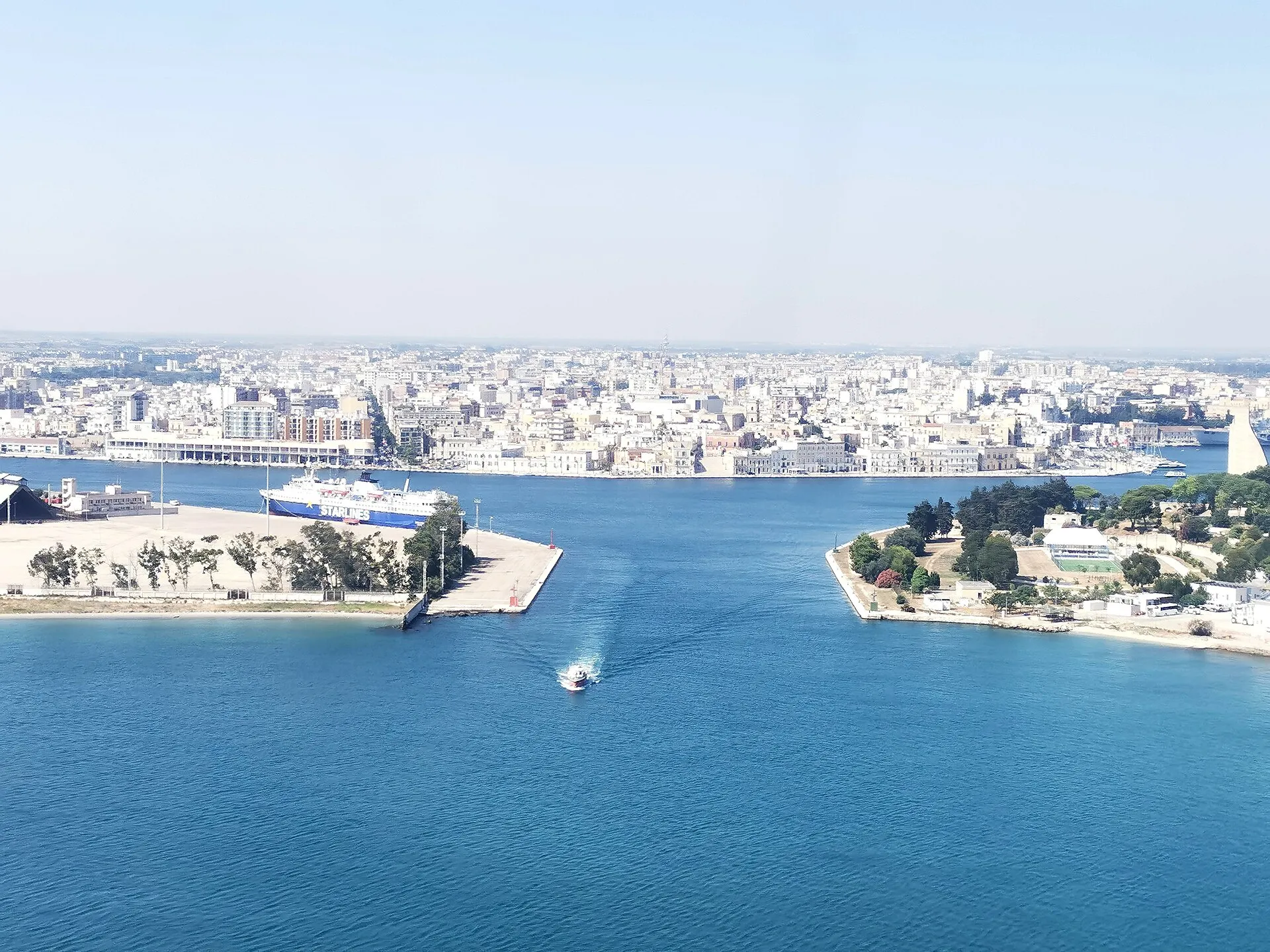
Waterfront
Modern Brindisi waterfront with boats and palm trees, photographed in 2024
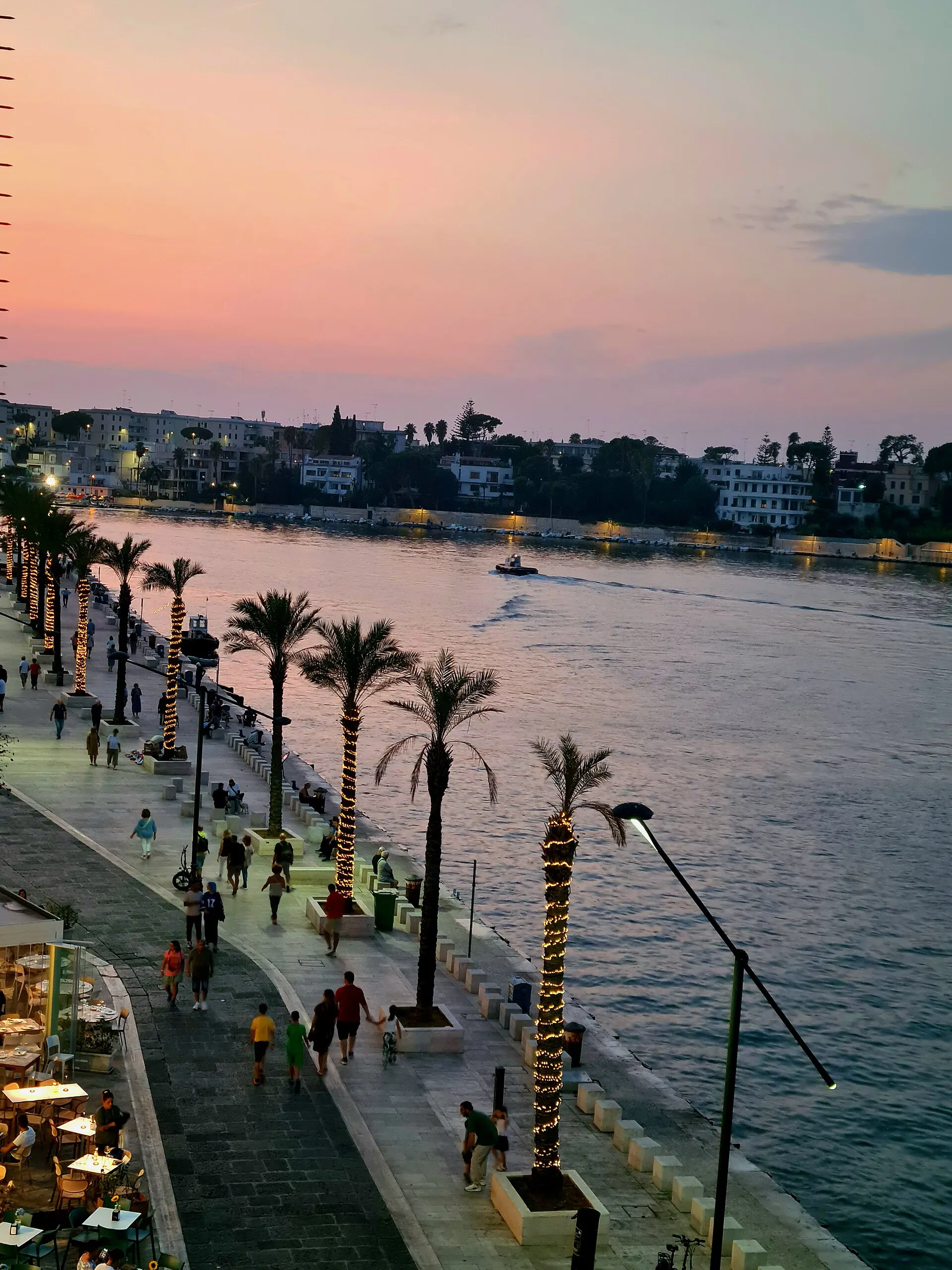
Sunset
Golden sunset over the Brindisi waterfront promenade
Photos: Wikimedia Commons (CC-BY-SA). See credits .
"Where the Via Appia meets the sea"
— The ancient endpoint of Rome's greatest road
Getting There
Travel Information
Brindisi is well connected by air, rail, and road
By Air
Brindisi Airport (BDS) — Aeroporto del Salento. Well connected with domestic and international flights, making it a convenient gateway to the Adriatic coast. Just 6 km (15 minutes) from the city center.
Bus, taxi, and car rental services available at the airport.
By Train
Brindisi Centrale is an important rail hub linking the city to several destinations across Italy. High-speed trains from Rome, Milan, and Bologna. Direct trains from Bari (1h).
The station is located in the city center, walking distance from most hotels.
By Car
Via the A14 motorway (Bologna–Taranto) and the E55 superstrada. Brindisi is well connected to the Italian highway network. Ample parking available throughout the city.
Car rental agencies available at the airport and city center.
By Sea
The Port of Brindisi serves as arrival and departure point for ferries and cruise ships, connecting the city with other Mediterranean destinations — including crossings to Greece (Igoumenitsa, Patras, Corfu) and Albania.
The ferry terminal is located in the city center, a short walk from the conference venue.
Venues
Conference Locations
All scientific sessions and social events take place in Brindisi's historic center
Palazzo Granafei-Nervegna
Scientific Program — Mon 21 to Fri 25 September
All scientific sessions — keynotes, oral presentations, poster sessions, and round tables — are held at the historic Palazzo Granafei-Nervegna, located in the heart of Brindisi's old town.
Built in the 16th century by the Granafei family (originally from Constantinople) and acquired by the Municipality in 1930, the Palazzo houses Roman-era mosaic floors and the original capital of the Roman column — on display in the evocative Hall of the Column on the ground floor.
Ex Convento Santa Chiara
Opening Day — Sun 20 September, 3:00 PM
The conference opens on Sunday, September 20 at 3:00 PM with the Channeling Primer session — formal greetings by Chairmen, organizers, and sponsors — followed by the Welcome Party, also held at this venue.
Founded in the second half of the 16th century as a convent of enclosure, the building was later transformed into a girls' orphanage and social centre. Since 2020 it has been managed by Yeahjasi Brindisi APS as a vibrant cultural hub — home to the Biblioteca del Vicolo, an open community library where events, workshops, and cultural gatherings regularly take place.